About this place: a timber office that learned to serve soup
How a sawmillers' office on Nicholson Street became a dining room and a casino room, and who looks after both of them.
“The building came first”
I am often asked how a timber company's office came to be a restaurant with a casino room, and the honest answer is that nobody planned it. The building at 82 Nicholson Street was erected for a firm of sawmillers when Orbost was a town of mills, bullock teams and a railway that ended at the river flats. It was designed to impress, and it did.
The front was the public counter, where timber getters and carters came to settle their accounts. A pay window in the side wall served the mill hands on Fridays, and behind a pair of double doors lay the board room, where the directors met beneath a plaster ceiling to discuss prices and rainfall in equal measure. Upstairs was a drawing office, now closed to the public, whose windows look over the river flats.
When the mills thinned out, the building became a dairy company's store, then a hall and then, for a long while, nothing in particular. Andrew Kennedy, who grew up three streets away, bought it with the modest ambition of saving the counter and the plaster ceiling from a skip. He spent a year on the roof alone.
The venue is operated by WAFFLE ADVERTISING LTD, 85 Great Portland Street, London W1W 7LT, United Kingdom. Andrew's own interest was never in running a restaurant. What he wanted was a room in which the town could sit down together again, and he asked me to find out whether that was possible with soup.
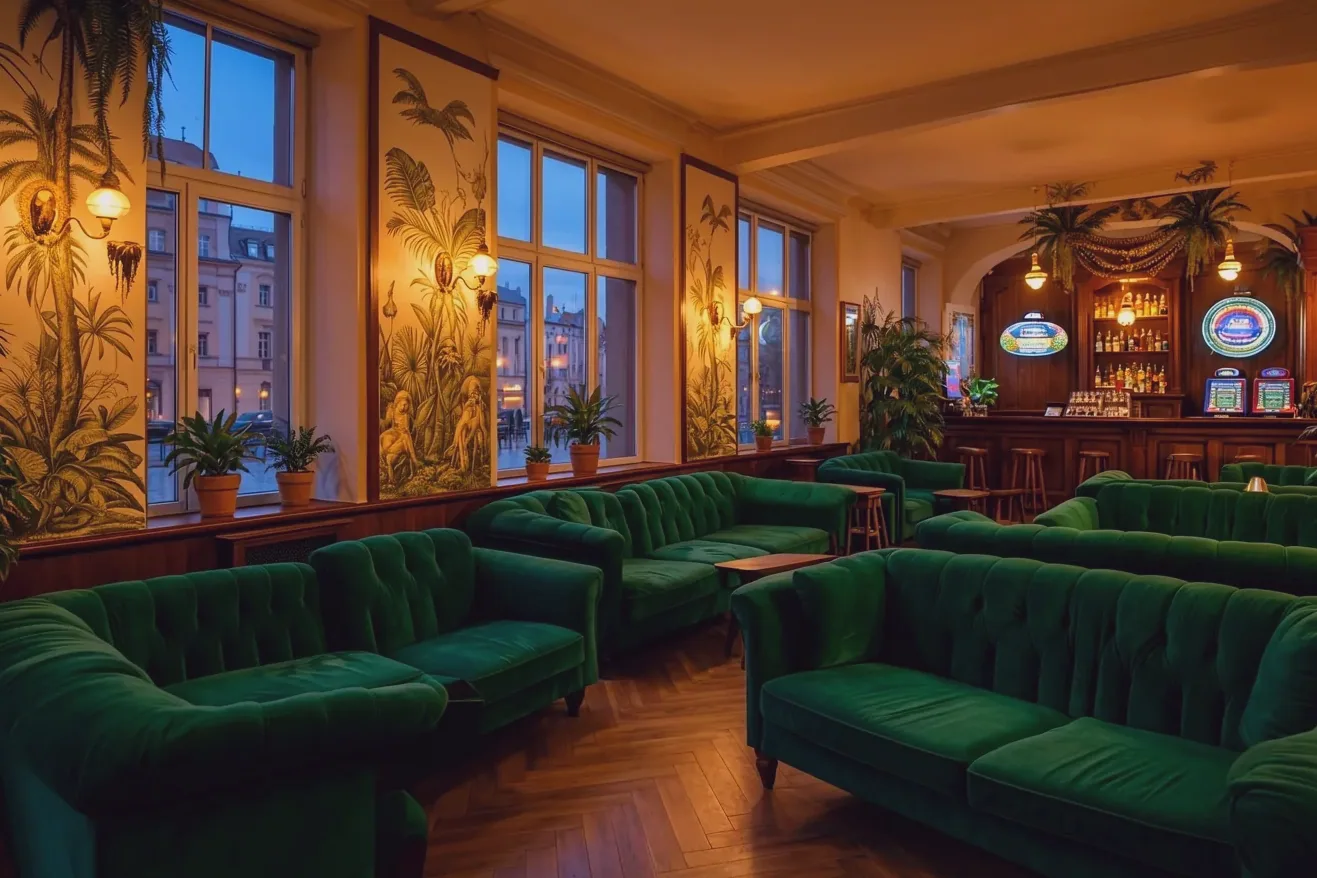
I had managed dining rooms in East Gippsland for twenty years, and I thought the idea sound. The counter hall made a dining room almost without alteration. The board room, with its panelling and its tall windows, seemed to be asking for something more companionable, and we settled on tables for cards, on the understanding that nothing would ever be played for money.
The pay window was the last problem. It was too good to board up and too small to be a door, until Stuart Butler, the cook, took one look and said that it was a pass in disguise. It now serves soup, and the original brass frame has been polished to a deep gold by the hands of clerks and waiters alike.
The old strongroom, with its iron door, is used each night to store the chips and the cards. The chips are worth nothing, as I never tire of telling guests, but the habit of locking up valuables dies hard in a building of this kind, and nobody has yet found a reason to break it.
“My father queued at that hatch on Fridays for his envelope, and I queue there for pea and ham soup. I would say the building has improved.”
“What I do, and how an evening is kept”
My own part is simple to describe. I manage the floor, which means that I decide who sits where, when the doors open, when the double doors are unlocked and when the lamps go out. I also keep the book, answer the telephone in the afternoons and settle, one way or another, any disagreement that the dealers cannot.
I came to Orbost from a larger town for the quiet and the river. I had spent my working life in rooms full of noise, and I wished to run one that was not. The lounge is, by design, a room in which one can hear one's neighbour. Conversation is encouraged, and a raised voice at the tables is the only thing I regard as a real offence.
I keep a few principles. A guest should be greeted within a minute of arriving and fed within a quarter of an hour of sitting down. A beginner should never be left to find the rules out alone. A regular should be able to count on a usual table, and a stranger should be treated as though they were one. These are not original principles, but they are rarely kept.
The casino room is run on the same lines. The dealers explain; they do not instruct. The chips are counted in front of the guest at the end of the night. Nothing is wagered, and nobody is paid. If a guest asks me what the point of it is, I answer that it is the same point as a game of chess in a good café: the company, and a way of passing the evening.
I should say a word about the town. Orbost is a place of long memories and short distances. The river decides the weather, the forest decides the work and the Princes Highway decides who passes through. Many of our guests have known one another for forty years, and visitors are drawn into the conversation within minutes, whether they wish it or not.
My working day begins at two in the afternoon, when I open the book and read the day's names. I walk the dining room, check the tables and speak to Stuart about what is on the pass. At three I take the telephone, at four I put on a jacket and at half past four I open the door and become, for six hours, the person guests expect to see.
The part of the work I enjoy most is the part nobody sees: watching a nervous first-time guest become comfortable. It usually takes about twenty minutes. They arrive tense, they eat a bowl of soup, they look at the double doors and, sometimes, go through them. Whether or not they do, I like to think they leave feeling that the evening was theirs.
Below are the three people who do most of the work at the tables and in the kitchen. They would be embarrassed to be called the heart of the house, so I shall call them the staff I would least like to lose.

“The three I rely on”

Rachel Harvey
Croupier
Rachel is our senior croupier and the person who trains the others. She dealt roulette and blackjack for eleven years in coastal venues and now prefers a quiet room with four tables. She explains each game once, carefully, and will repeat the explanation without sighing as many times as she is asked.

Stuart Butler
Head chef
Stuart grew up on a dairy farm near the river and learned to cook in a boarding-house kitchen. He serves through the old pay window and makes his own stock, pastry and ginger cordial. His rule is that no dish should require an explanation, and his pea and ham soup is the best argument in its favour.

Denise Bishop
Host
Denise keeps the door, the cloakroom and the book of names. She has lived in Orbost all her life and can place most guests within a sentence of conversation. Her talent is putting strangers at ease, which she does by asking after their drive and then listening, with real interest, to the answer.